The words are often associated with humility and the temporary nature of earthly life.
No matter how powerful, wealthy, successful, or admired someone becomes, human life remains fragile.
Death reminds everyone that worldly achievements cannot prevent the eventual passing of the body.
Yet the biblical image of dust contains another important truth.
It points back to creation.
In Genesis, humanity's physical existence begins through God's creative action.
From ordinary earthly material, God brings forth human life.
For Christians, that connection between creation and resurrection can offer reassurance.
The Creator who gave life is not limited by the natural processes that follow death.
A body buried in the ground gradually returns to the elements of the earth.
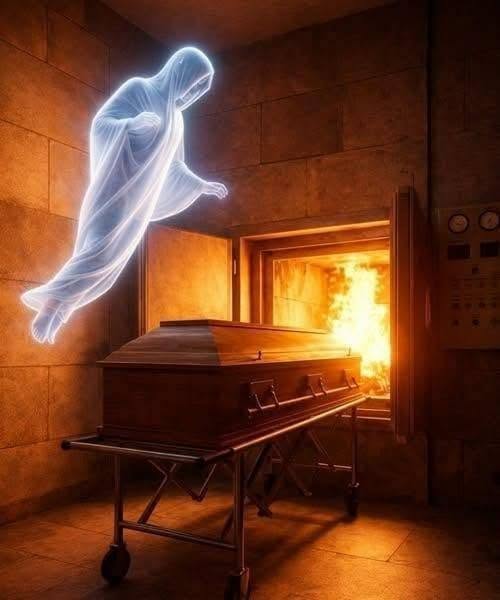
A cremated body undergoes that transformation through a different process.
Neither process places the person outside the creative power of God.
The image of dust therefore need not inspire hopelessness.
It may instead remind believers that their ultimate confidence rests not in the permanence of physical matter, but in the faithfulness of God.
This perspective does not eliminate the importance of burial traditions.
It simply places those traditions within a larger theological framework.
Human beings honor the deceased through the means available to them.
God's promised future, according to Christian faith, is not controlled by those means.
21. Resurrection Is a Promise, Not a Funeral Procedure
The apostle Paul's teaching in 1 Corinthians 15 remains one of the most influential biblical discussions of resurrection.
He presents the resurrection of Christ as central to Christian hope.
Without it, Paul's argument suggests, the Christian message would lose its foundation.
But because Christ has been raised, believers are given a reason to look beyond death.
This hope is not merely the idea that a person's influence survives through memories.
It is a theological claim that God will bring about a transformed future life.
Paul describes the resurrection body in terms of glory, power, and transformation.
The promise is greater than the simple restoration of the body's former earthly condition.
That distinction helps explain why cremation does not create a logical obstacle to resurrection.
The same transformation would be necessary for someone whose body had been carefully preserved.
Even traditional burial does not eliminate mortality, decay, or the changes that occur to human remains.
Everyone depends upon the same divine power.
Christian hope, therefore, does not rest on the strength of a coffin, the permanence of a cemetery, or the preservation of ashes.
Those things may serve important purposes for families and religious communities.
They can preserve memory and express reverence.
But they cannot produce resurrection.
Only God can accomplish what Christianity promises.
This is why the method of handling the body should never be confused with the source of eternal life.
The difference is profound.
Funeral arrangements belong to the responsibilities of the living.
Resurrection belongs to the promise of God.
22. A Final Reflection: What the Bible Ultimately Teaches
After examining Scripture, Christian history, church teachings, and the practical concerns families face, the central question becomes clearer.
Does the Bible explicitly say that cremation is a sin?
No. Scripture does not contain a universal prohibition declaring cremation sinful in every circumstance.
Burial is clearly the dominant biblical practice, and the burial of Jesus Christ gives it profound importance within Christian tradition.
For this reason, many churches continue to recommend burial, and some require it under ordinary circumstances.
The Bible also records unusual instances involving the burning of human remains, including the treatment of Saul and his sons.
Those accounts must be read carefully rather than used as simple proof that cremation is either universally commanded or universally forbidden.
Across Christian traditions, the most significant shared belief is that death does not place human beings beyond God's power.
The Christian hope of resurrection is not limited by the condition of earthly remains.
Fire cannot overpower God.
Neither can the passage of centuries, the depths of the sea, or the natural decay of a buried body.
At the same time, the human body deserves respect.
Families should approach funeral decisions thoughtfully, taking into account Scripture, religious tradition, personal conscience, and the wishes of the deceased.
A traditional burial may offer a beautiful image of the body resting in anticipation of resurrection.
A permitted cremation, handled reverently, can also accompany sincere Christian faith.
The exact answer about what is religiously acceptable will depend in part on the teachings of one's church.
But no Christian should confuse the physical process of cremation with a force capable of defeating God's promise.
In 1 Corinthians 15:22, Paul connects humanity's mortality with the new life made possible through Christ.
That promise forms the heart of Christian hope.
When loved ones gather to say farewell, they may stand beside a grave, a memorial garden, or a place where cremated remains will be laid to rest.
They may bring flowers, recite Scripture, offer prayers, or sit quietly with memories.
They may weep for what has been lost while giving thanks for what remains.
In each setting, the deepest questions are the same.
Was this person loved?
Will their memory be honored?
Can hope survive even the pain of separation?
For Christians, the answer to the final question is rooted in the resurrection of Jesus Christ.
Funeral customs may differ between countries, generations, and denominations.
Cemeteries may change. Traditions may develop. Families may face circumstances their ancestors never imagined.
Yet the message at the center of Christianity remains the same: death is not understood to have the final word.
And whether a believer's body rests beneath the earth or their remains have been reduced to ashes, the promise of resurrection does not depend on the manner of their funeral.
It depends on the power and faithfulness of God.
The final resting place of the body may be chosen by human hands, but the Christian hope of eternal life rests in something far greater than human hands can preserve.