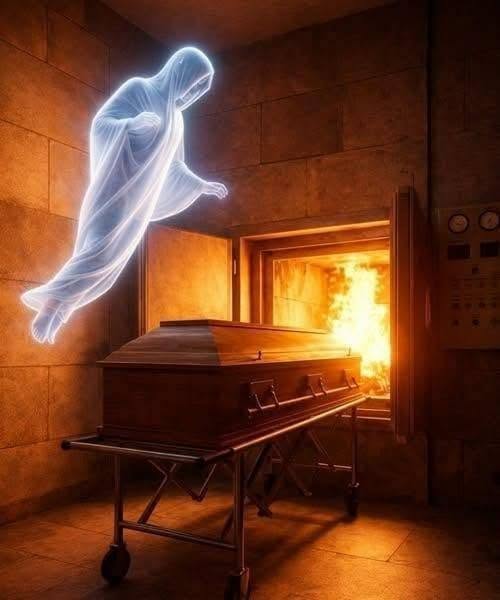
Perhaps a parent, spouse, sibling, or close friend was cremated years ago.
Perhaps the decision was made during an emergency.
Perhaps family members disagreed, or the deceased never explained their wishes.
Afterward, someone may begin hearing religious arguments against cremation and feel anxious.
Did we make a terrible mistake?
Did we dishonor our loved one?
Could our decision somehow affect their eternal future?
These concerns can become especially painful when grief is already present.
The most important theological reassurance is that Christian resurrection hope does not depend upon the physical preservation of a body.
A person who has been cremated is not beyond the reach of God.
In Christianity, salvation and resurrection are not achievements created by successful funeral planning.
They are understood in relation to God's grace and promises.
This does not erase the real differences among churches regarding acceptable funeral practices.
Someone troubled about whether their family followed the rules of a particular tradition may find it helpful to speak with a trusted pastor, priest, or spiritual adviser.
But fear should not be allowed to distort the central Christian teaching about God's power.
There is also an emotional truth worth remembering.
Families often make difficult choices with incomplete information.
Those choices may reflect circumstances that outsiders do not understand.
Grief can create a painful desire to revisit every decision and wonder whether something should have been done differently.
While reflection can be valuable, endless guilt rarely brings healing.
Remembering the deceased with gratitude, prayer, and acts of love may be a more constructive response.
The person who has passed away was more than a body.
Their life included relationships, experiences, generosity, struggles, and moments that continue to influence others.
Honoring that life remains possible long after the funeral is over.
18. How Families Can Make This Decision With Peace
When families discuss burial or cremation before a death occurs, they have an opportunity to prevent unnecessary confusion and disagreement.
These conversations can feel uncomfortable.
Many people prefer not to talk about their own mortality or imagine the eventual loss of someone they love.
Yet avoiding the subject can leave relatives facing difficult questions at the worst possible moment.
A thoughtful discussion may begin with personal beliefs.
Does the person feel strongly about traditional burial?
Do they belong to a church with specific funeral requirements?
Would they prefer a modest ceremony?
Is there a family burial place that carries special meaning?
Financial and practical circumstances should also be considered.
Families may wish to understand the costs of different options, the availability of burial space, and the rules governing cremated remains.
It can also be helpful to record final wishes in writing and make sure the relevant people know where that information is kept.
A written plan may not eliminate every disagreement, but it can reduce uncertainty.
For married couples and adult children, these conversations can be acts of care rather than signs of pessimism.
They communicate a desire to spare loved ones unnecessary burdens.
Religious leaders can provide another source of guidance.
A pastor or priest familiar with the family's beliefs may explain the available options and how funeral arrangements can reflect Christian hope.
Ultimately, decisions should be made through honest communication rather than pressure or fear.
No family should assume that everyone shares identical expectations about funerals.
One relative may view burial as essential to religious tradition.
Another may believe cremation is perfectly compatible with faith.
Listening respectfully can help prevent a disagreement about funeral arrangements from becoming a lasting conflict.
The purpose of a farewell is not to create divisions among the living.
It is to honor the deceased while allowing loved ones to mourn together.
19. What Matters More Than the Funeral Method?
Funerals are important, but Christianity also invites believers to consider the larger meaning of a human life.
A person may receive an elaborate burial and still have lived without compassion toward others.
Another may receive a simple cremation after a lifetime devoted to generosity, humility, and service.
The funeral method alone cannot tell the complete story of either person.
Jesus consistently emphasized qualities such as mercy, love, forgiveness, and faithfulness.
These values shape how Christians understand a meaningful life.
When someone passes away, the most lasting legacy is often found in the people they helped, the kindness they offered, and the relationships they nurtured.
A grandparent may be remembered for patient advice.
A mother may be remembered for years of quiet sacrifice.
A father may be remembered for working tirelessly to support his family.
A friend may be remembered for showing up during life's most difficult moments.
None of these memories depends on whether the person's remains were buried or cremated.
This does not mean the treatment of the body is insignificant.
Respectful funeral arrangements can be a beautiful final expression of love.
But they are not the entirety of love.
The character of a person's life and the relationships they leave behind deserve at least as much attention as the physical details of their farewell.
For believers, a Christian funeral also provides an opportunity to acknowledge grief honestly while proclaiming hope.
It is possible to mourn deeply and still trust in the resurrection.
Faith does not require pretending that loss is painless.
Jesus Himself wept at the tomb of Lazarus, according to John 11:35.
That brief biblical moment offers a powerful reminder that grief is not a failure of belief.
Sorrow and hope can exist together.
Whether a funeral takes place beside a grave or at a crematorium, the gathering can become a place where people acknowledge both the reality of loss and their enduring love.
20. The Deeper Meaning of Returning to Dust
One of the Bible's most recognizable statements about human mortality appears in Genesis 3:19.
The verse reminds humanity of its origin from dust and its eventual return to the earth.
This imagery has influenced Jewish and Christian reflections on death for centuries.