The analogy is beautiful because it suggests continuity without requiring everything to remain unchanged.
A seed and the plant that grows from it are connected, but they are not identical in appearance.
Likewise, Christian teaching about resurrection is not simply the expectation that the body will return to its previous earthly condition.
It is the promise of a transformed life beyond the limitations of mortality.
This symbolism helps explain why burial has held such an important place in Christian history.
For many believers, lowering a loved one's body into the earth resembles planting a seed while trusting God for the future.
However, the metaphor should not be confused with a physical requirement that God needs an intact buried body in order to accomplish resurrection.
Paul's teaching emphasizes divine transformation, not the preservation of particular biological materials.
The same God who created human life is understood to possess the power to restore it.
Therefore, although burial provides a meaningful illustration of resurrection, that illustration does not establish a limit on God's ability to fulfill His promises.
8. Why Christians Believe the Human Body Is Sacred
One of the strongest reasons Christians have traditionally favored burial is their understanding of the human body.
Christianity does not regard the body as a meaningless shell that becomes worthless when life ends.
According to Genesis 1:27, humanity was created in the image of God.
This belief gives human life a dignity that does not depend on wealth, age, physical ability, social position, or worldly accomplishments.
The apostle Paul develops the idea of bodily holiness in 1 Corinthians 6:19, where he refers to believers' bodies as temples of the Holy Spirit.
Although Paul's immediate teaching concerns how Christians should live and honor God with their bodies, it has also influenced Christian reflection on dignity in death.
If the body deserves respect during life, many Christians reason that it should not suddenly become an object of indifference after death.
This understanding shaped how early Christian communities cared for their deceased members.
They remembered the dead, gathered for prayer, and treated burial as a responsibility of love.
The body mattered because the person mattered.
That principle continues to shape Christian funeral ceremonies today.
A family may carefully choose a coffin, arrange flowers, prepare a grave, or place ashes in a designated resting place.
These actions are meaningful not because the deceased can benefit physically from decorations or elaborate ceremonies, but because they express love, remembrance, and respect.
It is equally important to recognize that dignity does not require an expensive funeral.
A simple ceremony can be just as respectful as an elaborate one.
A modest grave, a carefully chosen urn, or a quiet memorial service may communicate profound love.
The sacred worth of a person is not measured by the amount of money spent after their passing.
For this reason, Christians considering cremation should distinguish between treating the body carelessly and choosing a simpler method of final disposition.
The two are not necessarily the same.
A family may choose cremation while maintaining deep reverence for the person who has passed away.
At the same time, traditions that strongly prefer burial do so because they believe the treatment of the body should visibly express their theology.
Both the practical decision and the religious meaning deserve careful consideration.
9. Why the Early Church Preferred Burial
Christian burial practices did not develop in isolation.
The first Christians lived within Jewish and Roman societies that had different funeral customs and different beliefs about the human person.
Burial was already important within Jewish religious tradition.
In parts of the Roman world, cremation was also widely practiced, although Roman funerary customs changed across different periods and communities.
Early Christianity gradually developed a recognizable preference for burial.
This preference reflected several influences.
First, Christians inherited Jewish respect for the deceased and the importance of caring for human remains.
Second, the burial of Jesus provided a powerful model.
Third, the Christian proclamation of bodily resurrection gave burial a particular religious significance.
Finally, Christian communities sometimes understood their funeral practices as a way to distinguish themselves from surrounding beliefs and customs.
However, it would be too simplistic to say that every Roman cremation was an expression of pagan hostility toward Christianity.
Ancient people practiced funerals for many reasons, including family tradition, social status, regional custom, and personal belief.
Similarly, Christianity's preference for burial developed through a combination of theological conviction and historical practice.
Over time, burial became deeply embedded in Christian worship and communal life.
Cemeteries became places where generations of believers were remembered.
Funeral prayers connected grief with hope.
Memorials reminded the living of their responsibility to remember those who had gone before them.
This long history explains why burial still carries deep emotional and religious meaning for many Christians.
Even when cremation is permitted, burial may remain the preferred option because of the symbolism it communicates.
Yet historical preference and universal moral prohibition are not identical concepts.
Understanding that difference is essential to answering the question fairly.
10. Does Cremation Prevent the Resurrection of the Body?
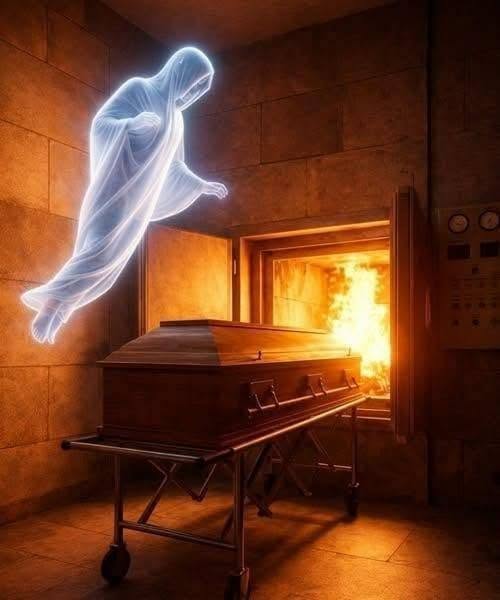
Perhaps the greatest fear surrounding cremation is the belief that a body reduced to ashes cannot be resurrected.
At first, this concern may seem understandable.
When a body is buried, people can imagine it resting beneath the ground until the resurrection.
Cremation appears more final because the body's recognizable physical form is destroyed.
But Christian teaching about resurrection has never depended on the body's ability to remain physically intact.
Even a traditionally buried body changes over time.
Natural decomposition gradually transforms human remains.
Across history, countless people have been lost at sea, consumed by fires, buried beneath collapsing buildings, or left without identifiable remains after disasters.
Others have lived and passed away in places where no permanent grave could be established.
Would their inability to receive a conventional burial place them beyond God's power?