The historic Christian answer is no.
The Christian doctrine of resurrection begins with God's creative power.
If God is capable of bringing life into existence, then the transformation or dispersal of earthly remains cannot be an insurmountable obstacle.
The early Christian thinker Augustine addressed this concern in The City of God, arguing that the loss or destruction of bodily matter does not defeat the promise of resurrection.
His reasoning challenged the assumption that physical destruction could make divine restoration impossible.
Revelation 20:13 also presents a striking vision in which the sea gives up its dead and death itself cannot permanently hold those summoned to judgment.
The imagery is powerful because it includes people whose remains may never have been gathered into ordinary graves.
In other words, the reach of God's power is not limited to cemeteries.
A person buried beneath the earth and a person whose remains have been cremated are equally dependent upon the power of God for resurrection.
Neither can raise themselves.
Neither possesses a physical advantage that makes resurrection possible through human effort.
The decisive factor in Christian hope is not the method of bodily disposition, but the promise of God.
This does not mean funeral practices are unimportant.
It means their importance is symbolic, moral, pastoral, and communal rather than a mechanical condition for eternal life.
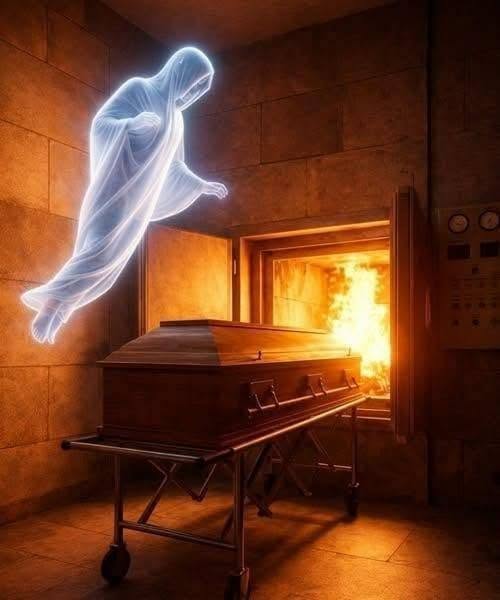
Cremation cannot make resurrection impossible, because resurrection is understood as an act of God, not a process controlled by the condition of human remains.
11. What Does the Catholic Church Teach About Cremation?
The Catholic Church provides one of the clearest examples of how Christian funeral practices have developed over time.
For centuries, Catholic teaching strongly favored burial and restricted cremation, particularly when the practice was associated with the rejection of Christian beliefs.
A significant disciplinary change came in 1963.
The Church clarified that cremation is not inherently contrary to Christianity and that Catholic funeral rites need not be denied simply because a person had chosen cremation, provided the choice was not motivated by rejection of the faith.
Later, the 1983 Code of Canon Law incorporated this approach.
In 2016, the Vatican issued the instruction Ad resurgendum cum Christo, which provided further guidance.
The instruction reaffirmed the Church's preference for traditional burial while acknowledging that cremation can be acceptable for legitimate reasons.
These may include economic, sanitary, and social circumstances.
The Vatican also explicitly stated that cremation does not prevent God from raising the deceased to new life.
This is an important clarification because it addresses one of the most common fears among believers.
However, Catholic permission for cremation does not mean every practice involving ashes is permitted.
Under the Church's general rules, cremated remains are to be laid to rest in a sacred place, such as a cemetery or another appropriately designated location.
The scattering of ashes and their division among relatives are generally prohibited. Keeping ashes in a private home is also restricted, subject to specified exceptions and subsequent clarifications by Church authorities.
These requirements reflect the Catholic understanding that human remains should receive lasting respect and remain connected to communal remembrance and prayer.
Thus, the Catholic position is not simply that burial and cremation are completely interchangeable in every respect.
Rather, burial remains preferred, while cremation may be chosen without contradicting the faith when the required conditions are respected.
Vatican Press+1
12. Protestant and Orthodox Perspectives
Christian denominations do not all approach cremation in exactly the same way.
Many Protestant churches permit cremation and leave the decision largely to individuals and families.
Within these communities, a funeral may focus on Scripture readings, prayer, thanksgiving for the person's life, and the proclamation of resurrection hope.
The choice between burial and cremation may be regarded as a matter of personal conscience and pastoral judgment rather than a test of salvation.
The Church of England, for example, offers Christian funeral services at crematoria, and its ministers may participate in prayers when ashes are placed in their final resting place.
Its guidance also recognizes the burial of cremated remains in churchyards, subject to applicable rules.
The Church of England+1
Eastern Orthodox Christianity generally takes a more restrictive approach.
Orthodox funeral traditions place particular emphasis on the body, the continuity between earthly life and resurrection, and the example of Christ's burial.
The Orthodox Church in America describes burial as the normative practice and teaches that cremation should ordinarily be avoided.
It also recognizes that exceptional circumstances may require pastoral consideration.
The precise consequences for funeral rites can depend on the relevant Orthodox jurisdiction and its pastoral authorities.
Orthodox Church in America+2
These differences reveal something important.
Christians broadly affirm the resurrection of the dead and the dignity of the human body, but they do not all reach identical conclusions about which funeral practices best express those beliefs.
Consequently, a Christian planning cremation should consider both Scripture and the teachings of their own church.
A decision that is straightforward within one denomination may require consultation with religious leaders in another.
Respecting those differences allows families to make informed decisions without misrepresenting Christian traditions.
13. Can Choosing Cremation Be Sinful?
The answer depends partly on the beliefs of the Christian tradition involved and the meaning attached to the choice.
In many Protestant theological approaches, cremation is not considered inherently sinful.
Catholic teaching likewise permits cremation under defined conditions.
Eastern Orthodox practice is generally more restrictive.
One important distinction is between the physical act of cremation and the beliefs or intentions that may accompany it.
Consider two different situations.
In the first, a Christian family chooses cremation because a traditional burial would create serious financial hardship.
They organize a respectful service, offer prayers, remember their loved one, and place the remains in an appropriate resting place.
Their decision does not express disbelief in God or rejection of the resurrection.