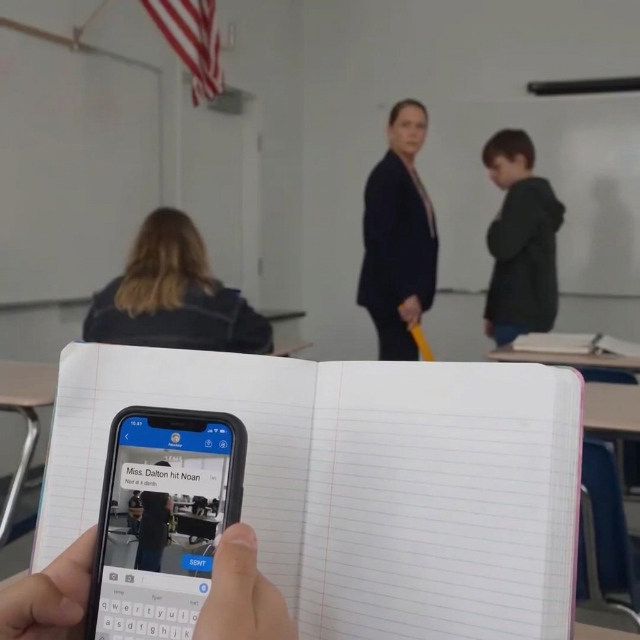
Mrs. Dalton’s classroom looked successful from outside.
Room 204 had been featured on the regional educational consortium's promotional website for three consecutive years.
Photographs showed rows of uniform desks, immaculate color-coded supply bins, and inspirational posters celebrating academic excellence and personal discipline.
Visitors regularly commented on how silent the room was, marveling at how twenty twelve-year-olds could sit for ninety minutes without a single whisper or rustle of paper.
By three o'clock that afternoon, the reality behind that silence began to emerge.
District investigators Frank Henderson and Rebecca Ward began conducting private, individual interviews with every student who had been in Room 204 during fourth period.
One by one, accompanied by their parents, the sixth-graders walked into the media center annex.
A girl named Maya sat down, holding her mother’s hand so tightly her knuckles were white.
"She kept a tally board behind the classroom calendar," Maya whispered, looking at the carpet. "If anyone dropped a pencil during silent reading, they got a red mark. Three red marks meant you had to eat lunch standing against the wall by the trash cans."
"Did she use the ruler on anyone else, Maya?" Henderson asked gently.
Maya swallowed hard, glancing nervously at the door before nodding.
"She hit Lucas on the knuckles last month when he forgot his colored pencils for geography. She told him that pain was the body’s memory system."
In the next room, Lucas and his father confirmed the account.
"Lucas came home with bruised knuckles three weeks ago," his father said, his voice breaking with rage. "He told us he jammed his fingers in his locker. He was terrified that if we called the school, Mrs. Dalton would give him a zero on his quarterly portfolio."
The investigators compiled statement after statement.
The silence in Room 204 had never been the product of mutual respect or educational engagement.
It was the brittle, suffocating silence of twenty terrified children who had learned that compliance was the only way to avoid public humiliation, academic destruction, or the heavy wooden edge of an administrator's favorite ruler.