Chapter 1
Shingles is one of those conditions that can be confusing at first. It may begin with pain, tingling, itching, or unusual sensitivity in one area of the body before the familiar rash appears. Because these early symptoms can resemble muscle pain, an insect bite, a skin irritation, or another everyday problem, some people do not realize what is happening until the rash becomes more obvious.
Shingles is caused by the varicella-zoster virus, the same virus that causes chickenpox. After a person recovers from chickenpox, the virus does not necessarily disappear completely. Instead, it can remain inactive in nerve tissue for years and later reactivate, producing shingles.
The condition is common, particularly with increasing age, but it can also occur in younger adults, especially when the immune system is weakened.
Knowing the early warning signs can help you recognize the condition sooner and seek appropriate medical advice.

What Exactly Is Shingles?
Shingles, medically known as herpes zoster, occurs when the varicella-zoster virus becomes active again after previously remaining dormant in the body.
The reactivated virus travels along a nerve and usually causes symptoms in a specific area supplied by that nerve.
This explains one of the most characteristic features of shingles:
The rash often appears in a localized band or patch on one side of the body.
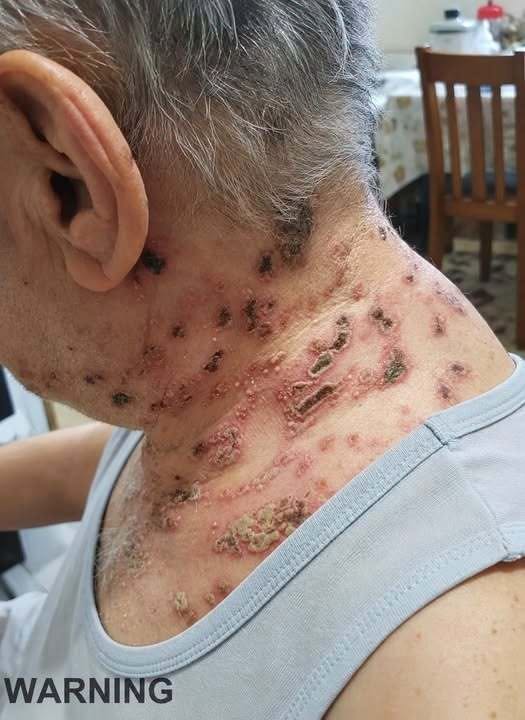
It can occur on the chest, back, abdomen, face, neck, or elsewhere.
Unlike many ordinary rashes, shingles frequently involves nerve-related pain or unusual skin sensations.
1. Pain, Burning, or Tingling Before the Rash
One of the earliest clues can occur before you see anything unusual on your skin.
A particular area may begin to feel:
- Burning
- Tingling
- Itching
- Prickling
- Aching
- Numbness
- Unusual sensitivity to touch
Some people describe the sensation as similar to an electrical shock.
Others may feel as though their skin has been sunburned even though they have not been exposed to the sun.
This can be confusing because there may initially be no visible rash at all.
The discomfort often occurs in a relatively specific area rather than throughout the entire body.
If unexplained burning or nerve-like pain is followed by a rash in the same location, shingles becomes an important possibility to discuss with a healthcare professional.
2. A Rash Appears on One Side
The classic shingles rash often develops on one side of the body or face.
It may follow the path of a nerve and can appear as a stripe, cluster, or band of affected skin.
This pattern is an important clue.
For example, a person might develop a painful rash extending across one side of the chest or around one side of the back.
The rash usually does not form a perfectly symmetrical pattern across both sides of the body.
However, appearance alone cannot establish a diagnosis.
Several other skin conditions can cause localized rashes, so medical evaluation may be necessary, especially when pain accompanies the skin changes.
3. Small Blisters Can Develop
After the initial redness or irritation, shingles can produce small fluid-filled blisters.
These blisters may appear in groups rather than as isolated spots.
Over several days, they can become cloudy, rupture, and eventually form crusts as they heal.
This evolution can make shingles look different at different stages.