The Surprising Truth About Bologna: From Old-World Italian Craft to the Lunchbox Classic
Bologna hides a deeply fascinating secret that most people never bother to question or investigate.
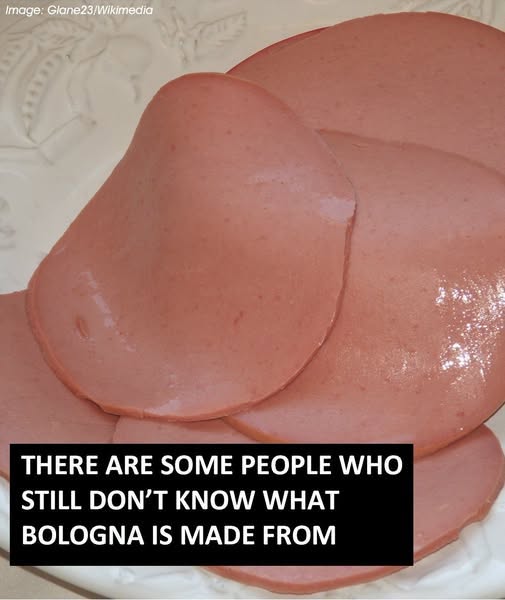
It sits quietly in school lunchboxes, rests on cheap white bread, and is folded into neat, neon-pink circles of mystery across millions of refrigerators.
We casually feed it to our kids, joke about it as the ultimate processed “junk food,” and yet we still keep buying it week after week.
What if the real story behind that smooth, pink slice is far stranger, more historically rich, and more carefully controlled than you ever imagined?
Contrary to popular belief, modern bologna is much less of a random “meat mush” and far more of a tightly regulated, highly engineered modern descendant of old-world sausage craft.
Today’s commercial slices are typically crafted from beef, pork, chicken, or a carefully balanced blend of meats.
This meat is finely ground and emulsified into that familiar, velvety smooth paste, before being thoroughly cooked and often smoked inside either natural or synthetic casings.
While urban legends and pop culture love to imagine mystery ingredients like beaks, hooves, and kitchen scraps, strict food safety regulations and current consumer market demand tell a different story.
Most mass-produced bologna actually relies on standard cuts of meat and fat trimmings, debunking the nightmare scenarios of urban folklore.
To truly understand how this processed staple came to be, we have to look across the Atlantic to its sophisticated Italian cousin: mortadella.
Hailing proudly from the historic city of Bologna, Italy, traditional mortadella is a flavorful, artisanal sausage beautifully speckled with rich cubes of pork fat, whole peppercorns, and sometimes pistachios.
American bologna, by stark contrast, was streamlined, homogenized, and stripped of its ornamentation to build a product focused entirely on mass uniformity and affordability.
If you take a close moment to read the ingredients label on a standard package, you will see the straightforward truth: simple spices, natural sweeteners, and finely emulsified meat.
It is certainly not a health food by any nutritional standard, but it is not a mystery monster either.
Ultimately, bologna is just a heavily processed comfort food that we as a society have collectively chosen to both mock and keep eating.
It represents a triumph of industrial food engineering that managed to transform traditional European sausage-making into an accessible, everyday American classic.
So, the next time you unwrap a package for a quick sandwich, you can enjoy it knowing the fascinating history resting quietly between your slices of bread.