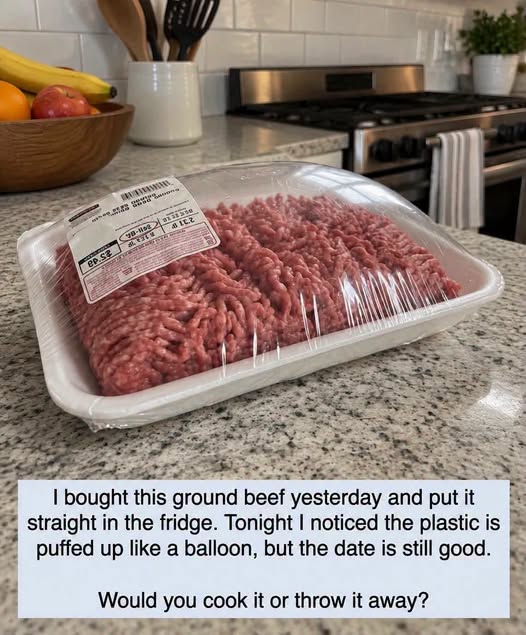
The Fridge Warning You Can’t Ignore: Why a Swollen Package is More Than Just an Inconvenience
When you open your refrigerator and spot a food package that looks unusually bloated or inflated, it can easily trigger a wave of immediate concern.
That swollen container sitting quietly on your shelf just might be a critical safety warning that you simply cannot afford to dismiss.
While some foods are deliberately packed with protective gases during manufacturing, unexpected bulging can point to dangerous spoilage hiding behind an ordinary, familiar label.
Before you decide to open that package or take a reassuring bite of its contents, it is vital to know why this difference matters so much.
Understanding the science behind food spoilage also reveals why relying on a normal smell alone can never completely rule out real, invisible danger.
Fortunately, not every inflated bag or package automatically means trouble for your health.
For instance, snack foods like potato chips often contain inert nitrogen gas to protect their fragile crunch and prevent them from getting crushed during transit.
Additionally, some refrigerated grocery products utilize specialized protective gas mixtures to naturally extend their freshness and shelf life.
The true cause for concern is unexpected swelling, particularly in food packages that have noticeably changed shape or ballooned during home storage.
Microbial activity, including bacterial growth and fermentation, can generate gas rapidly inside sealed foods, making a swollen container a major red flag for potential spoilage.
Bulging metal cans, in particular, deserve extreme caution and immediate dismissal.
Some compromised canned foods can harbor deadly toxins, such as Clostridium botulinum, and neither visual appearance nor a normal smell can reliably establish whether the food is safe to eat.
To protect yourself and your household from foodborne illness, smart prevention starts right at the grocery store.
Always thoroughly inspect your items and avoid purchasing unexpectedly swollen refrigerated packages, as well as any cans that bulge, leak, show heavy rust, or feature deep dents near their seams.
Once you bring your groceries home, keep all perishable items properly refrigerated at or below 40°F (4°C) and strictly follow the printed storage instructions on the packaging.
Remember that stamped expiration and best-by dates offer helpful guidance, but they are never an absolute guarantee of long-term safety.
Never taste questionable food to test whether it is still good, and under no circumstances should you ever open a severely bulging can.
Instead, carefully follow local disposal guidance for any suspect canned goods to ensure they do not pose a hazard to anyone else.
At the end of the day, losing a single meal or wasting a few dollars is infinitely better than risking your health and well-being.