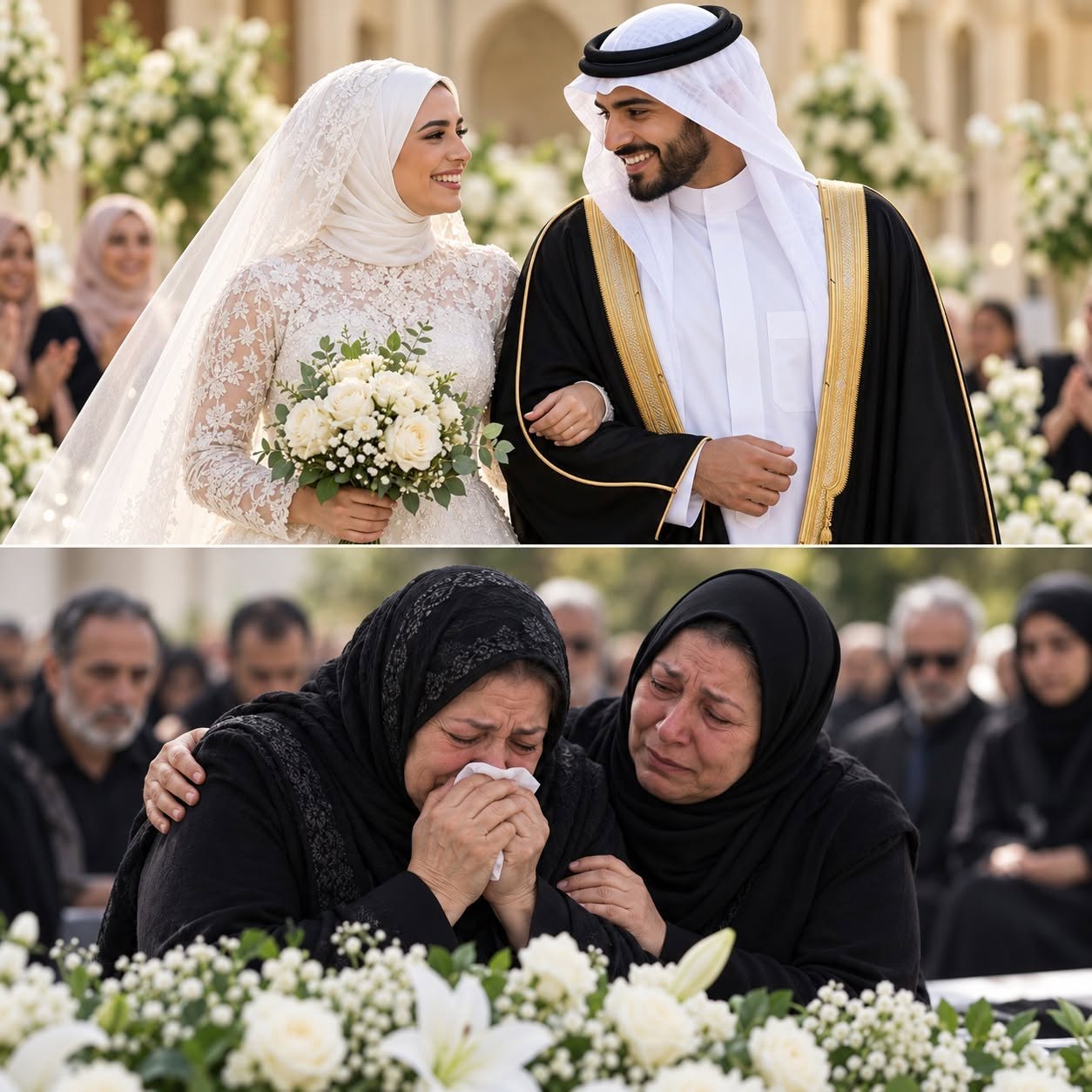
Yet as time passed, Sarah began thinking differently about what Rashid had left behind.
Money couldn't bring him back.
But perhaps it could be used to continue some of the values that had mattered to him.
Rashid had believed strongly in ambition, opportunity and entrepreneurship.
Sarah decided to honor that part of him.
She used some of the money to establish a scholarship in his name for young entrepreneurs.
It became a way of transforming part of her grief into something constructive.
Young people with ideas but limited resources could receive opportunities that might otherwise have been beyond their reach.
Sarah also continued supporting charities that Rashid had cared about.
Each contribution became a small way of keeping his generosity alive.
His legacy, she realized, didn't have to end on the morning he died.
Keeping Someone With You
Sarah kept a photograph of Rashid on her nightstand.
At night, she sometimes spoke to him.
She knew he wasn't going to answer.
That wasn't the point.
The ritual helped her maintain a connection to a part of her life that mattered deeply.
She also continued wearing her wedding ring.
Years passed.
Friends occasionally wondered whether she might eventually marry again.
Sarah never did.
It wasn't because she believed happiness after loss was impossible. Nor did she think everyone who loses a spouse should make the same choice.
It was simply her choice.
She had experienced a love that had transformed her life, even though it lasted far less time than she expected.
"I had my great love," she later told a friend. "I'm not going to settle for anything less."
For Sarah, Rashid wasn't defined only by the tragedy of his death.
She remembered his laugh.
She remembered conversations over dinner.
She remembered the small gestures that had made her trust him.
She remembered why she had fallen in love with him in the first place.
The wedding wasn't erased by what happened the following morning.
It remained one of the happiest days of her life.
That was something grief couldn't take away.
What Their Story Says About Time
Sarah and Rashid had approximately eighteen months together through their courtship, engagement and marriage.
Measured against an entire lifetime, eighteen months sounds painfully short.
But human relationships aren't measured only by calendars.
A person can be present in your life for decades without truly knowing you.
Another person can enter your world for a comparatively brief period and change you permanently.
Sarah could have looked back and wished she had never met Rashid because losing him hurt so much.
She didn't.
She could have regretted opening herself to love again after her first engagement ended.
She didn't.
She could have wished there had never been a wedding because of the painful memories attached to it.
She didn't.
If she could choose again, knowing how the story would end, she believed she would still choose the time they had together.
"I'd rather have one day with him than a lifetime with anyone else," she would say.
That idea became central to the way she understood her grief.
The value of love isn't necessarily determined by how long it lasts.
Some relationships end after fifty years.
Some end after five.
Some are interrupted almost as soon as they begin.
What matters to the people involved is often the life contained inside that time—the conversations, jokes, ordinary mornings, difficult days, celebrations and moments that no one else sees.
Sarah couldn't change how much time she had been given with Rashid.
She could decide what that time meant.
A Different Kind of Anniversary
Sarah continued marking their wedding anniversary.
For other couples, an anniversary might mean dinner, flowers or a weekend away.
For Sarah, it became a day of remembrance.
She looked through photographs.
She thought about their wedding.
She remembered the flowers, the music and the way Rashid had looked at her during the ceremony.
Inevitably, she also remembered the morning after.